Showing posts with label Poorhouse. Show all posts

Sunday, June 21, 2015

Almshouse in Maps: 1901 County Atlas


The next view of the almshouse, from the 1901 county atlas, is somewhat awkward, as the page cuts the area surrounding the almshouse in half. What is notable, however, is the relatively detailed view of the almshouse that this map provides. You can clearly see the large main building and many outbuildings, as well as the fact that the almshouse is sandwiched between two large estates belonging to two wealthy men, John D. Rockefeller and James Butler, respectively. In fact, the almshouse seems to be located on the property of James Butler. I am somewhat confused by the parcel marked "John Brown." Is this part of James Butler's estate, or a separate property? I expect I will find out when I get around to reading all of the material that I have recently accumulated!

Almshouse in Maps: 1893 Bien Map


I've made some pretty amazing discoveries about the almshouse since I last posted (or rather, some awesome people who read this blog provided those discoveries to me!) but I'd like to finish up with the maps before I share them here. This map is the 1893 Bien Map of Mount Pleasant and Ossining. As you can see, what was previously labeled as "East Tarrytown" is now known as "East View." This was the estate purchased by James Butler, a wealthy grocery store tycoon, the same year that this map was published. The hamlet of East View is somewhat similar to the old hamlet of East Tarrytown, with the same collection of small dwellings (though there seem to be fewer) and the almshouse (now labeled "County Poor House") -- but there are some notable changes, including the extension of the Putnam Division railroad in 1880, the construction of the Methodist Church, and the presence of another estate (Tower Hill/Kingsland Estate) nearby.

The overall trend seems to be toward greater consolidation and industrialization, which is gradually changing the landscape of the former small agricultural hamlet. The almshouse stood as a witness to these changes, but within a few decades its own existence would be threatened by local development.

Here's the full map for context:

Saturday, June 20, 2015

Almshouse in Maps: 1872 Beers Map of Mount Pleasant


The next map to feature the Westchester County Almshouse was published in 1872: the Beers Atlas of Westchester. I feel like this map is a lot more detailed than the 1867 one, or perhaps there has just been a lot of change in five years. For instance, Tarrytown Heights is mapped out, likely showing a recent subdivision that would be parceled out in lots in later years. Despite the encroachment of the subdivided areas on the countryside surrounding East Tarrytown, most of the houses and house owners remain the same.


Furthermore the almshouse itself appears to be virtually unchanged, with the same four buildings arranged next to the river; though it's now labeled as "County Alms House" instead of "County House Hospital."

Here's the full map for some context:

Thursday, June 18, 2015

Almshouse in Maps: 1867 Beers Atlas

So far, this is the earliest map I've been able to locate that shows the County Almshouse. Printed by Frederick W. Beers in 1867, it identifies the almshouse as "County House Hospital" and places it in the hamlet of East Tarrytown, near the place where the Saw Mill River changes directions from south to west, forming an angle. You can see that the hospital complex consists of three small buildings and one long one, standing adjacent to one another on the west side of the river.

There are quite a few farmsteads and houses located along the Saw Mill, as well as the S&G Mill. In the left of the detail above, you can see marked "W. Landrine - House where Andre was brought after his capture." This is the Landrine House, pictured below in The History of Tarrytown and Sleepy Hollow, which was at that time owned by the Reed family. It no longer exists.

Virtually the entire hamlet of East Tarrytown - also known as Eastview - was destroyed in the creation of the Saw Mill River Parkway, and the topography of the area was significantly impacted. Thus it is a bit tricky to correlate the old maps with what is currently there, but I'm working on it. 


I am hoping to learn more about the almshouse when I visit the Westchester County Archives again, which contains all of the almshouse records, beginning with the opening of the almshouse in 1828. Up until that year, the individual towns provided for their respective poor populations. The almshouse centralized and systematized the care provided to the county's poor.

Update: Summer 2015


Hello, everyone! After a long hiatus (thanks, grad school), I am back and planning to add lots of new discoveries to this blog. Most of them will be centered around my Master's thesis, currently in the works. In case you're interested, this is the abstract of my thesis proposal, titled "Excavating Personhood in the 19th-century Graveyard":
The St. George’s/St. Mark’s Cemetery in Mount Kisco, New York, offers an ideal site in which to investigate the construction of 19th-century middle-class personhood through intersectional processes. Previous studies have generally conceptualized the gravestone either as a passive reflection of social realities or as a site of the momentary suspension of social difference. The proposed study will marshal historical and archaeological evidence in demonstrating how gravestones functioned as active participants in the articulation of class- and gender-based identities and accordingly, in the negotiation of power. The gravestone represents a crucial player in the performance of middle-class habitus as it was staged throughout the 19th century. Though tied to larger historical movements, the construction of the American middle class took place within the realm of everyday material practice, in which the gravestone constituted an instrument for the enactment of embodied dispositions. By revealing the contingencies surrounding the formation of middle-class personhood, this study will denaturalize the categories that organize both historical and present-day social realities.
I am excited to share the results of my research so far, which has been undertaken mainly at the Westchester County Archives in Elmsford and the Mount Kisco Historical Society. I may also end up visiting the New York Public Library, the Municipal Archives in Manhattan, and even the State Archives at Albany.

My research mainly involves people and things: who those people were, and how they created, expressed, and maintained those identities through things. More specifically, how did various realms of material culture collude in the creation of a middle-class identity, and how was that identity asserted against its "Other," the marginalized classes of the poor?

Perhaps the most illustrative example of this process I can give is that of the St. George's/St. Mark's Cemetery, an 18th- and 19th-century middle-class graveyard that has been immaculately preserved throughout the years, in juxtaposition with the 19th- and 20th-century graveyard of the Westchester County Almshouse, which is currently sealed beneath a highway. The historical boundary between the middle class and the poor continues to be enforced into the present, so that the poor become as marginalized in death as they were in life.

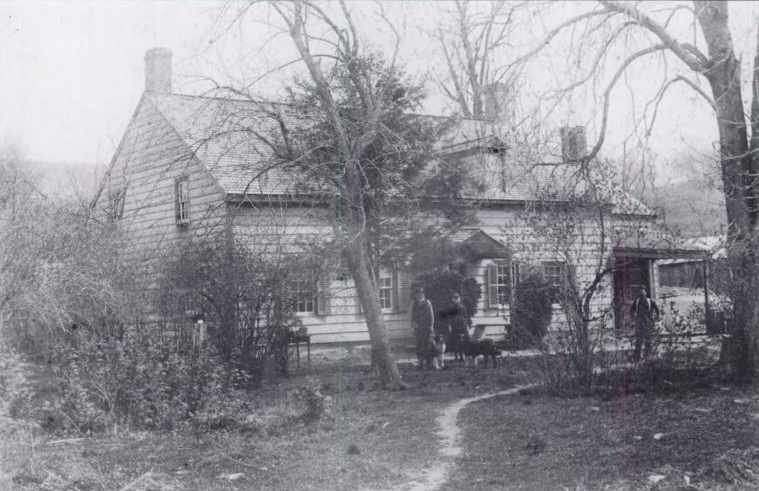
Over the next few months (before I head back to school), I hope to use this blog as a place to share my research and test out some ideas before they become processed and packaged into the body of my thesis. For now, here's a first glimpse of the Westchester County Almshouse as it appeared around the turn of the century, courtesy of Harvard University Library.

Thursday, July 18, 2013

James J. and Carrie J. Gorham

When Charles and Caroline Gorham buried their two children within just a few weeks of each other in the middle of the summer of 1860, there would have been many parents in the community who knew their pain. The 1850s and 1860s were the worst decades for children in the cemetery's history. A full third of the burials that took place in those years were those of children 10 years old or younger. With the 1870s, child mortality would start to decline. The cemetery would decline, too - not of a consequence of the decreased mortality rate, but rather of the foundation of a rival cemetery several blocks away.

But in the 1860s, the cemetery was busier than it had ever been or would be again. Dozens of caskets would have made their way up the gravel pathway to the new church, built in 1852. Others would have entered the other cemetery, behind the church, through its side entrance, via an iron gate that is now propped up against a tree. This back half of the cemetery site belonged to the Methodists, and it is where the Gorhams were buried.

Charles W. Gorham, the children's father, was a shoemaker who was born in Connecticut around 1827. In 1850, he and his wife Caroline lived in Lewisboro with their one-month-old child, Clarence.

1850 US Federal Census
Unfortunately, I can't find the Gorhams in the 1860 or 1870 censuses, so a full thirty years passes before I see them again. During that time, they lost two children, and possibly more. They also had at least one grandchild. Edward Field, their grandson, was living with them in Lewisboro. Unfortunately, due to the gap in the censuses, I don't have the name of a single daughter of the Gorhams other than Carrie, the one-year-old who died in 1860.
 
1880 US Federal Census
Charles W. Gorham died in 1882 and was buried in the cemetery. In 1895, his 68-year-old widow sought shelter in the Westchester County Almshouse. The document below states that Caroline Gorham had one sister, one brother, and one child surviving. The reason for her stay was that she was "sick," and her chances of recovery were deemed "not probable."

1895
Charles and Caroline's sole surviving son, Charles F. Gorham, was living in Ansonia, Connecticut, with his family: his wife Sarah and their four daughters and one son.

1900 US Federal Census
I would love to fill in more details about the Gorhams - for instance: When did Clarence Gorham die and where is he buried? What is Charles Gorham's connection to the other Gorhams in the cemetery? When did Caroline Gorham die, and did she ever leave the Almshouse? And did the following children all die of the same illness?

Carrie J. Gorham, died 1 August 1860
George Starr Gorham, died 4 May 1860
James J. Gorham, died 23 July 1860
Lillian Harriet Gorham, died 17 October 1860

It just seems like a lot of Gorham children (4) dying within a short period of time (five months).
  1. Charles W. Gorham (1827-1882) m. Caroline M. (1828-)
    1. Clarence Gorham (1850-)
    2. James J. Gorham (1856-1860)
    3. Carrie J. Gorham (1859-1860)
    4. Charles F. Gorham (1861-) m. Sarah Jane (1859-) in 1885
      1. Mable B. Gorham (1887-)
      2. Eloise Gorham (1890-)
      3. Hazel Gorham (1871-)
      4. Bessie M. Gorham (1894-) m. Charles W. Clark (1889-)
      5. Edwin W. Gorham (1896-1961)

Sunday, April 14, 2013

24: Susan Emily Woolsey

Grave of Susan Emily Woolsey (source)
There are six Woolseys buried in the cemetery, four of whom died in the 1850s. The grave of the youngest Woolsey is perhaps the most poignant: it commemorates Susan Emily Woolsey, only child of Jonathan and Maria Woolsey, who died in 1859, four years after the death of her father.

Jonathan Woolsey's father, Jonathan Sr., died the year that Jonathan Jr. was born, making him the last of ten children by Jonathan's mother, Susanna Carstang. Susanna's parents were Gideon Carstang (1751-1817) and Catharine Fowler. Gideon Carstang was a descendant of Gideon Carstang, a rope maker born in the 1680s who lived at Philipsburgh Manor, and his wife Catherina Cockefer, a woman of Dutch descent.

In 1850, 25-year-old Jonathan Woolsey Jr., a cartman, was living in Manhattan with his wife Maria, 24. According to the census, they had been married that year. They shared their apartment with 14-year-old Hannah Nickinson, a servant. Their daughter Susan was yet to be born.

In 1851, the succession of Woolsey deaths began with the death of Susanna Carstang Woolsey. Her son Jonathan died in 1855; his grave is inscribed: "By his wife Maria this stone was placed." Jonathan's brother Joseph died in 1858, and finally Jonathan's daughter Susan died in 1859. As always, I wonder if the same disease carried both of them off.

What of Jonathan and Susanna's eight other children?

Catharine Woolsey, the couple's first child, was born in 1806 and died in 1809.

Isaac Woolsey, born 1810, was a boat captain. The year before she died, Susanna was living with him, his wife Marietta Bird, his unmarried sister Mary, and his son Alonzo in Ossining. Alonzo later became a guard at Sing Sing Prison, though not at the same time as Amos Babcock.

1850 US Federal Census
Mary Woolsey, born 1816, married Gilead Holmes, who owned a furniture store. They had two children, Charles and Marietta. In 1870 they were housing their niece, Susan, and in 1880, Susan's father Daniel. Mary died in 1893.

Susanna Woolsey, born 1821, married Valentine Cox, a miller, and lived in Lewisboro. They had five children. Susanna died in 1889. After his wife's death, Valentine moved in with his widowed daughter, Mary Church, and her house full of Churches.

Daniel Woolsey, born 1823, was a shoemaker who married Mary Sands. By coincidence, they also happened to have a daughter Susan Woolsey who was born around 1850. In 1870, Susan was living with her aunt Mary Holmes. By 1880, Susan had moved out, but now Daniel was living with Mary, her husband Gilead Holmes, and their son Charles. Both Daniel and Charles worked as clerks in Gilead's furniture store. However, in 1896, he was admitted to the Westchester County Poorhouse as "sick and destitute." He was recorded as having two brothers living, but the number "2" was then crossed out. Two children were living, though.

I have seen many people - either those buried in the cemetery or their relatives - who were in the Westchester County Poorhouse at one point in their lives. This was a time before nursing homes, hospices, or home health aids, and so many of the people who wound up in the poorhouse were simply old and sick and unable to take care of themselves. They might have had family, but family members might have been ill-equipped to take care of them. Without knowing more details, I can't really judge Daniel's family who were unable to give him a place to live in 1896.

I realized that I've been forgetting to count the most popular given names in each family. So here are the most popular names in the Woolsey family:

Mary/Maria (6)
Susanna/Susan (5)
Catharine (3)
Marietta (2)
Jonathan (2)
Charles (2)
Carrie (2)
  1. Jonathan Woolsey (1783-1826) m. Susanna Carstang (1786-1851) in 1805
    1. Catharine Woolsey (1806-1809)
    2. Joseph B. Woolsey (1807-1858) 
    3. Isaac Woolsey (1810-1856) m. Marietta E. Bird (1815-)
      1. Alonzo B. Woolsey (1839-1914) m. Carrie M. Ackerman (1841-before 1910)
        1. Charles Woolsey (1864-1880)
        2. Carrie Edna Woolsey (1874-1914)
    4. James Woolsey (1812-)
    5. Catharine Woolsey (1814-)
    6. Mary Woolsey (1816-1893) m. Gilead Holmes (1824-)
      1. Charles Holmes (1856-)
      2. Marietta Holmes (1858-1935) m. Marcus Washburn (1853-) in 1887
        1. Harold Holmes Washburn (1891-)
    7. Sarah Woolsey (1819-)
    8. Susanna Woolsey (1821-1889) m. Valentine Cox (1822-1903)
      1. Mary J. Cox (1849-)
      2. Sarah F. Cox (1851-)
      3. Maria L. Cox (1853-)
      4. Ellen B. Cox (1858-) m. Francis B. Church (1855-)
        1. Susannah Church (1876-) m. Young
          1. Mary E. Young (1909-)
        2. Clarence E. Church (1878-) m. Catherine Ward (1877-) in 1898
          1. Elsie I. Church (1899-)
        3. Ernest Church (1880-) m. Frances (1877-)
          1. Ellwood B. Church (1904-1974) m. Helen Cone (1905-)
            1. Shirley H. Church (1925-)
            2. Norma M. Church (1928-)
      5. Georgeanna Cox (1859-)
    9. Daniel Woolsey (1823-) m. Mary Sands (1823-before 1880)
      1. Susan Woolsey (1849-)
    10. Jonathan Woolsey (1826-1855) m. Maria (1827-) in 1850
      1. Susan Emily Woolsey (1850-1859)